If you want to motivate group fitness classes through choreographed routines, you’ll want to learn how to become an Exercise to Music Instructor.
In this guide we’ll teach you how to do just that, as we discuss:
- How Much Can You Earn As An ETM Instructor?
- The Qualifications You Need To Become An ETM Instructor
- Working As An ETM Instructor In A Gym Vs Self-employed
- Will You Need Insurance Once Qualified As An Exercise To Music Instructor?
- The Skills You Need To Be A Successful ETM Instructor
- Career Progressions Available For Exercise To Music Instructors
Before we dive in, if this is a career you’re interested in exploring, get started today and enquire about our Level 3 Exercise to Music Course or download our free course prospectus to learn more!
How Much Can You Earn As An ETM Instructor?
Before you become an ETM Instructor, you’ll naturally question how much you could earn in this role. The answer to this will be determined by whether you work in a contracted position or on a self-employed basis.
For example, should you decide to work at a gym you’ll likely be employed as a freelancer, in a similar capacity to fitness instructors. Indeed reports the average national earnings to be €18.96 per hour.
This is a great place to build experience leading sessions, before progressing on to running your own classes.
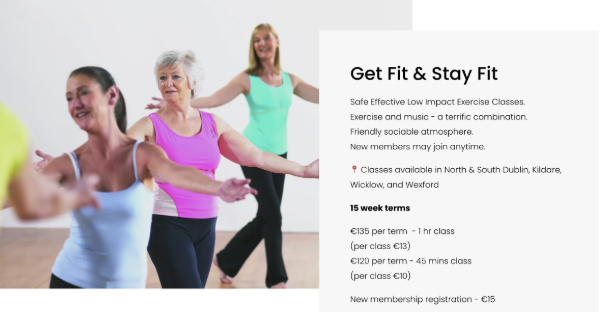
Whilst working in this capacity, you could run specialist classes that target a specific demographic in society. For example, The Fitness League creates safe, inclsuive spaces for women looking to stay active, charing between €10-€13 per session:
The Qualifications You Need To Become An ETM Instructor
To become an ETM instructor you will need to complete a Level 3 Exercise to Music Instructor course.
This entry-level qualification will train you to deliver engaging and effective music fitness classes, teaching you vital skills such as how to:
- Write fitness programmes to help improve your classes’ fitness levels
- Adapt your teaching style and routine to assist different class members
- Motivate clients to help them achieve their fitness goals
At OriGym, our Exercise to Music qualification is Ofqual-regulated, which guarantees you’ll be trained to the highest industry standards.
Working As An ETM Instructor In A Gym Vs Self-employed
We previously discussed how, if you decide to become an ETM instructor you can pursue various forms of employment, both in contracted and self-employed capacities.
But how do these two roles differ from one another? Let’s take a look at the responsibilities you’ll be required to perform in each position.
#1 – Working at a gym

As an employed ETM instructor you will be able to work at a variety of gyms, studios and sports centres.
The role is beneficial, particularly if you’re looking for a regular working pattern and economic stability. This is because you will likely be employed on either a full or part-time basis.
When employed in this manner, you’ll be expected to perform a range of duties including:
- Supervising and leading classes
- Creating exercise to music sessions
- Follow health and safety regulations
- Build a strong rapport with clients and staff
Job responsibilities can differ between employers, some might ask you to write your choreography whilst others might want you to deliver pre-designed routines.
Whilst an employed position can offer job security and financial stability, it’s important to remember that you’ll have to work hours determined by your employer.
So if you want to become an ETM Instructor who has greater flexibility in their working week, you might want to consider becoming a self-employed/freelance ETM Instructor.
#2 – Self-Employed/Freelance ETM instructor
If the idea of becoming an ETM Instructor at a gym feels professionally and personally confining, don’t worry you’re not the first to feel this way. Many ETM instructors choose to pursue freelance and self-employed opportunities, to have more control over when and where they work.
Another added benefit of becoming an ETM instructor on a self-employed basis is that you will have more control over what kind of classes you teach. This will provide you with the opportunity to expand your existing repertoire or develop a specialism in one specific area.
For example, you could decide to just focus on teaching aerobics class or alternate between the likes of kettlebell sessions and Zumba®!
Keep in mind, as a self-employed ETM Instructor, you won’t be directly contracted by a gym. This means that you won’t receive a monthly wage like an employed staff member. Instead, you will likely be paid for every class you teach.
However, whilst self-employed roles offer greater professional freedom, there are also some downsides to the role. For example, some individuals may not feel secure working irregular shift patterns.
Will You Need Insurance Once Qualified As An Exercise To Music Instructor?
When learning how to become an Exercise to Music Instructor, you’ll need to understand the importance of insurance. Whilst this may seem like an insignificant detail, without the proper coverage you could face legal issues such as financial loss and even jail time in severe cases.
Specifically, you’ll need to get public liability, personal accident, and personal income insurance.
These policies will protect you financially and legally in the instance of:
- A specific action is brought into question following a client’s injury
- You are personally injured during a session and will miss work
- You require physio treatment for an injury suffered at work
- Your equipment is damaged or stolen
- An employee is injured during a session and claims compensation
Remember, insurance coverage varies between providers, so be sure to read your insurance quote thoroughly to make sure you’re receiving the right protection.
The Skills You Need To Be A Successful ETM Instructor
To become a successful ETM instructor, there are several skills you need to possess, including:
- Communication – By directing large groups, giving them clear instructions on how to perform movements correctly
- Creativity – To develop choreographed routines for specific classes and music genres, this will keep classes engaging for clients as it limits repetition
- Observant – Offer appropriate feedback to struggling class members, so they can make corrections or keep class members motivated with praise
- Broad Musical Knowledge – Understanding the tempos of different music genres will help you create routines that complement the rhythm of the music
- Rhythm – Know how to use the speed and tempo of the music to help improve your class’ overall fitness levels
By completing an Exercise to Music Instructor Course with OriGym, you’ll learn how to incorporate these skills into every class you teach. Discovering how to deliver freestyle and choreographed sessions, suitable for different age groups and demographics.
Career Progressions Available For Exercise To Music Instructors
Holding a Level 2 Exercise to Music Qualification serves as the perfect platform for you to explore other career paths and potentially increase your earning potential. Below are a couple of examples of the careers you can pursue:
#1 – Personal Training

Becoming a personal trainer is a natural progression after you’ve been working as an ETM instructor!
Compared to being an ETM instructor, personal trainers predominantly work with clients on a 1-1 basis, creating bespoke workout programmes to help them achieve their individual goals.
To pursue this professional milestone, you must complete a Level 4 Personal Training course.
At OriGym our personal training course is Ofqual-regulated, ensuring all our students are trained to the highest possible industry standards.
Completing a Level 3 PT qualification is a natural next step in your professional career, as you will already meet the prerequisites required to enrol on this course – For reference, we ask all applicants to be aged 16+ and to already hold a Level 3 ETM qualification.
After becoming a qualified Personal Trainer you will be able to pursue new job opportunities and generate a higher income, with an expected salary of up to €32,000 per year.
#2 Start Your Own Class Business
Alternatively, you may decide to become an ETM instructor who runs their classes, rather than going through an employer.
One of the biggest advantages of pursuing this role is that you will have limitless earning potential. This is because you will be in charge of setting the prices for your classes.
In addition to this, you could also decide to pursue a specific demographic, tailoring your ETM classes directly to this audience. For example, this could include classes suitable for pregnancy or elderly individuals with mobility issues.
#3 – Zumba® Instructor
You may think you can instantly teach Zumba® classes, but that’s not the case. What you may not know is that officially certified Zumba® instructors hold branded certificates. Meaning individuals who hold holistic qualifications will not be able to teach Zumba®.
The course only takes one day to complete, allowing you to pursue new career opportunities instantaneously. However, keep in mind that Zumba requires its instructors to renew their qualifications every 6 months.
For this reason, becoming a Zumba instructor will provide you with an additional stream of revenue, but should not be considered as an equivalent to becoming an ETM instructor.
#4 Gain CPDs To Teach Different ETM Classes

Following your work as an ETM Instructor the role will feel like second nature to you, which means you can start looking for new variations of fitness classes to deliver.
You could achieve this by completing additional CPD courses to expand your skill set. For example, during the CPD kettlebell course you’ll learn:
- How to incorporate the equipment into workouts
- Exact movements & modifications for clients
- How they can benefit your client’s health and fitness goals
This will complement your work as an ETM instructor, allowing you to teach classes that combine music with this engaging piece of equipment.
The skills acquired during your ETM course will help you lead these classes, as you can create choreographed routines focused on lifting and movements that will match the rhythm of the music.
Before You Go!
Remember, completing other specialist fitness course will help set you up for future success. Alternatively, you check out all the other qualifications we offer at OriGym by downloading our FREE course prospectus.